
How Jake Reder's love of the Upper Valley led to a life turning academic discoveries into medicine at Celdara Medical
Jake Reder has a simple explanation for how he came to run one of New Hampshire's most closely watched biotech companies. "Basically," he says, "I'm a trailing spouse."
Reder was raised in Canada and did his undergraduate work at the University of Waterloo. He started his chemistry PhD at Purdue and finished it in Munich when his thesis advisor moved the lab to Ludwig Maximilians Universität. In Munich, he took a job at a venture firm, which helped him appreciate the business side of science.
Upon his return to the U.S., he landed in Boston doing strategic alliances for a Fortune 500 company. Meanwhile his fiancée, immunologist Mary Jo Turk, accepted a tumor immunology position at Dartmouth "before tumor immunology was cool."
For the first few years, the couple met on weekends. "That was fine," Reder says, "until we had a one-year-old who could ask where dad was all week."
The move north was about family, but it became something more. "I grew up in rural Canada," he says. "For raising a family, there's no better place than the Upper Valley."
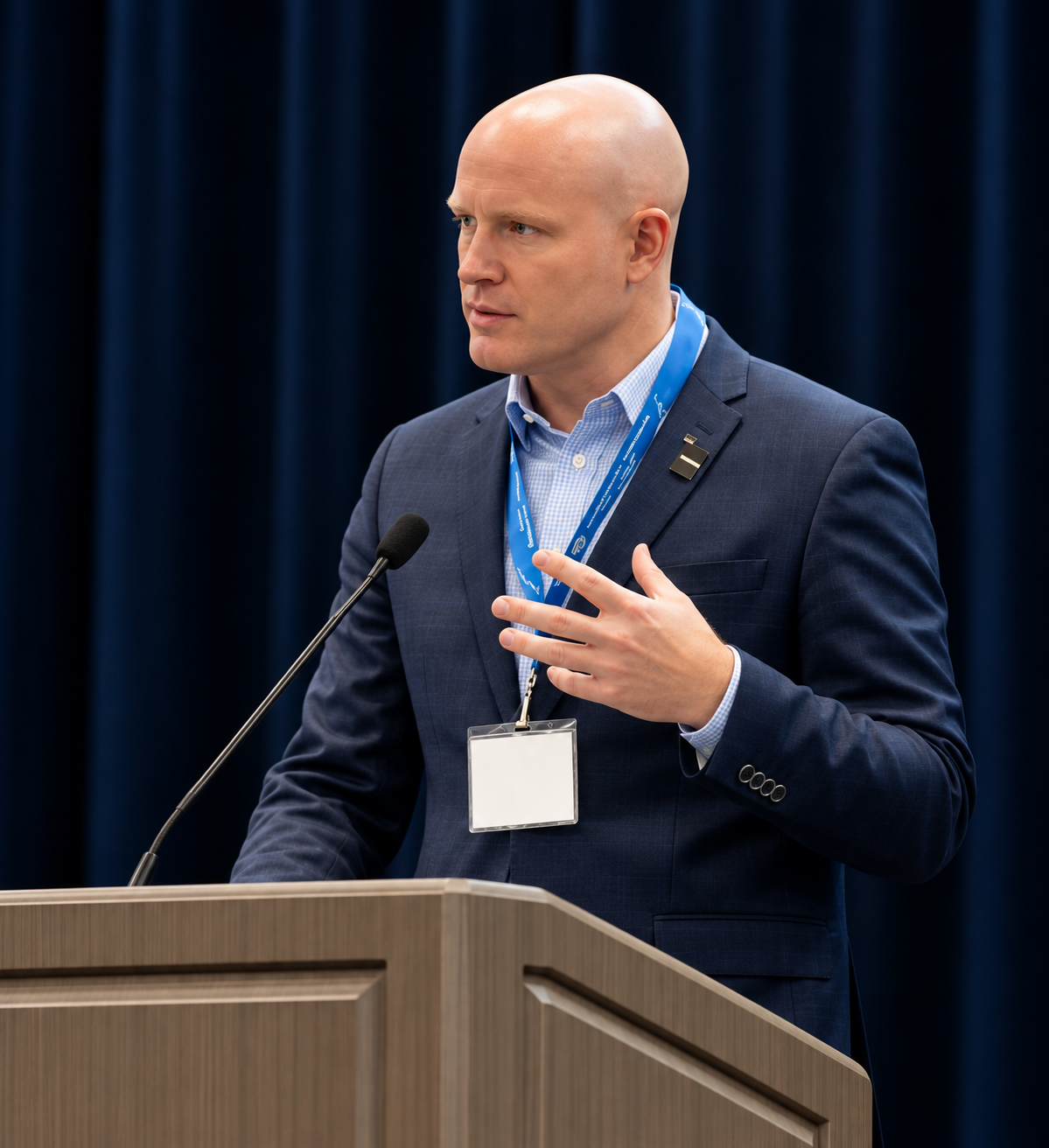
Celdara Medical co-founder Jake Reder
"Basically," he says, "I'm a trailing spouse."
Born at the dinner table
The idea for Celdara took shape over dinners at the home of Turk's faculty mentor, Randy Noelle, and his wife, Barb. Noelle would talk about how Dartmouth could do more translational research, and Reder would share an investor's and dealmaker's view.
Then three things happened at once. Leadership changed at Reder's employer and the company took a new direction. His toddler kept asking that question. And Noelle proposed a new ventures office at Dartmouth's medical school to help move research out of the labs.
Noelle introduced Reder to Bill Green, former Chair of Microbiology and Immunology and Dean of the medical school, who subsequently introduced him to Professor Michael Fanger, another former Chair and a cofounder of Medarex, whose work helped launch the field of cancer immunotherapy.
After two weeks walking the halls of the medical school, Reder saw that the mission would benefit from a vehicle outside the college, one that could take more risk and raise capital. Reder and Fanger cofounded Celdara Medical in September 2008, 10 days before Lehman Brothers collapsed.
"It was the perfect time to start a company, because nobody was paying attention," Reder says with a laugh. "The rest of the world was saying the sky's falling, and we were figuring out how to do payroll."
A tiny lab with no windows
Like every startup, Celdara began with no space. The DRTC was full. Celdara joined the waitlist and rented offices in Lebanon to start. But what the company really needed was proper biotech lab space.
"We were somewhat limited in what we could do until a tiny little lab in the basement with no windows opened up in the DRTC, and we were thrilled to have it," Reder says. "We've moved within the building a couple of times since, but the DRTC has always been our home."
That flexibility is the point. Reder's advice to founders is direct: "Even if you have money, it takes a lot of time to build lab space. This is why the DRTC is so important."
No need to pivot
Reder expected Celdara to change course a few times. It never did. Within months, the company widened its search beyond Dartmouth inventions, but that was scaling, not a change of strategy. Today it reviews hundreds of innovations a year and selects only a handful to help advance, derisking those technologies to get them into shape for larger biopharma partners.
Reder has kept the company intentionally small. At his first board meeting, he described his "100-year vision" as a dozen people spinning out a company every few years. "I've worked in multinationals," he says. "I find it nicer to be in a small group where everybody knows each other. We know each other's dogs."
But small hasn't meant a lack of impact. Reder guided Celdara from concept to the state's fastest-growing company across all sectors three years running, and in 2017 the SBA named him New Hampshire Small Business Person of the Year. Celdara has brought multiple products to clinic and services to market. Celdara's leadership of the DRIVEN program, which supports early-stage life science companies, has helped regional companies raise more than $100 million in follow-on funding since 2018.
A community of support
Reder describes the DRTC as a natural extension of Dartmouth, which he calls the "center of mass" of the region's innovation. Many tenant companies are built on discoveries from labs down the road, so relationships and referrals flow freely.
In one case, a Dartmouth professor recommended Celdara consider a colleague's promising protein. The data looked good, and Celdara won a federal research grant worth $2 million to advance it.
In another case, in 2015 Dartmouth created an innovative Clinician-Entrepreneur Fellowship through its SYNERGY CTSA. The first Fellow was Dr. Rick Barth, Chief of Surgical Oncology. Barth, along with Thayer professors Venkat Krishnaswamy and Keith Paulsen, used the fellowship to build a company to advance the Breast Cancer Locator technology, which ultimately became the basis for CairnSurgical. Reder advised the team from concept through company formation, and now chairs CairnSurgical’s board. Cairn moved into the DRTC, raised venture funding, completed their pivotal trial, and applied for FDA marketing authorization.
That collegiality, Reder says, is part of the region’s character. "I don't compete with the other companies up here; I want them to win," he says. "Their product is health, and it's very easy to be enthusiastic about somebody improving human health."
The network also solved a talent problem. In 2008, moving to the Upper Valley for a biotech job was a gamble: if it didn't work out, you probably had to leave to find something new. Now there are enough companies that it no longer feels risky. Reder estimates Celdara's average employee tenure is close to a decade, compared with the 18-to-36-month churn he sees in Boston.
"The Upper Valley is not Boston, and different does not mean worse," he says. "People are coming here clear-eyed. They value the lifestyle, the community, and the outdoors."
Still, Reder does recognize the limits. In the 1990s, Medarex grew to about 35 people before recruiting stalled and the company moved to New Jersey. “Hiring a thousand people quickly would still be hard,” Reder says, “but for a startup hiring dozens quickly, the Upper Valley now works.”
Keeping growth here
For Reder, the clearest economic development win is what happens when a local company gets acquired. He points to Dartmouth professors Chris Bailey-Kellogg and Karl Griswold, whose company, Stealth Biologics, was acquired by Insmed. The team grew inside the DRTC in Lebanon, and Insmed is now expanding in the region.
"If the DRTC wasn't here, I would expect they may have made a different decision," Reder says. Insmed probably still would have bought the company, he says, but would likely have told the team they needed to move. "Allowing this team to remain - and grow - here is a boon to the region."
His message to entrepreneurs who want to stay is that the path has been walked before. He points to Hypertherm as proof that companies can scale to over 1,000 people here, and he says investors have grown far more willing since COVID to look beyond the Route 128 corridor.
"The region is an incredible advantage," Reder says. It draws exceptional people who love skiing, the outdoors, and everything the region brings - people much like the trailing spouse who came north for his family and ended up being central to building an innovation hub.
This spotlight is part of a series of posts highlighting the innovators and companies that make up the DRTC. Learn more about the DRTC.